
Benford’s Law: Detecting AI-Generated Images Without AI
An 88-year-old fraud-detection law, applied to JPEG compression math, flags AI-generated and heavily edited photos — no AI detection model required at all.
An 88-year-old fraud-detection law, applied to JPEG compression math, flags AI-generated and heavily edited photos — no AI detection model required at all.
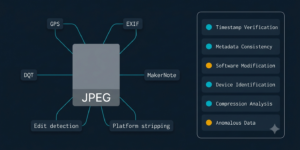
Every JPEG carries six forensic signals beyond what you see in a photo viewer. This guide covers all of them and explains what they reveal in combination.
Three methods now exist for identifying AI-generated images. Two of them fail when the creator says nothing. This article covers all three — and goes deep on the forensic signals that work regardless of what any label says.
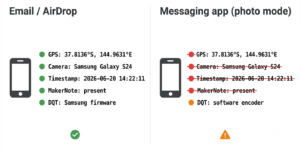
Whether you can read metadata from a received photo depends on the channel, not the tool. Email and AirDrop pass the file unchanged. Messaging apps re-encode — EXIF is gone, but a compression signature takes its place.
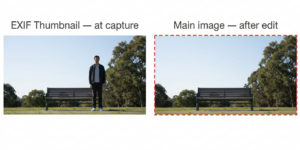
JPEG, WebP, PNG, HEIC, AVIF, and camera RAW files embed a firmware-generated thumbnail before any editing software has touched them. When software re-saves the image without updating the thumbnail, the mismatch is forensic evidence — one of 60+ forensic checks snapWONDERS runs automatically on every photo and video.
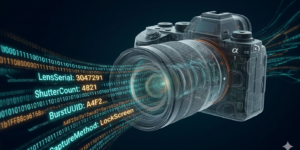
MakerNote is the manufacturer-written EXIF block that standard stripping tools typically leave intact — carrying lens serial numbers, shutter counts, burst UUIDs, and capture context that survives a standard privacy scrub. Its absence from a known device is equally revealing.
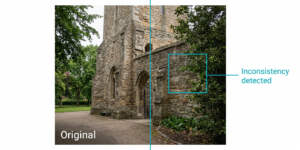
How to tell if a photo has been edited: forensic analysis reads compression signatures, manufacturer metadata baselines, and thumbnail mismatches across JPEG, WebP, PNG, and video.
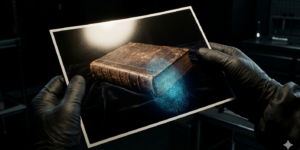
Stripping EXIF metadata doesn’t make a photo anonymous. DQT quantisation tables and Huffman coding tables are baked into the JPEG compression — a permanent camera fingerprint that survives every standard metadata strip. Two of the 60+ forensic checks snapWONDERS reads from every image.
How I built the DQT encoder fingerprint database inside snapWONDERS — deriving libjpeg tables mathematically from the ISO standard, and running a live accumulation pipeline with a trust model to guard against faked metadata. And what this has to do with Vaultify.

These days I’ve been busy on my latest project at snapWONDERS focused on our latest research development with AI and image processing. Digital media is of utmost importance in today’s …