Tracking vs Fingerprinting: Two Ways Your Photos Can Point Back to You
A serial number is tracking. Your firmware, colour profile and time zone are a fingerprint. I tested what stripping metadata removes and what it leaves.
Photo and video forensic analysis, metadata, and authenticity
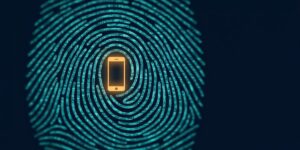
A serial number is tracking. Your firmware, colour profile and time zone are a fingerprint. I tested what stripping metadata removes and what it leaves.

One AI agent found a bug. Three others on related work needed to know. Why coordinating AI agents through handoff files failed for me, and what fixed it.

snapWONDERS just passed six million media processing jobs. The number is new. The reason it exists isn’t.
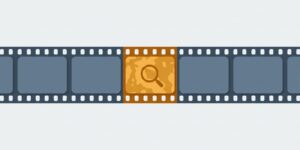
A forensic report asks two questions about a video’s frames: are any too different, and are any too similar? Here’s what each one actually catches — and misses.
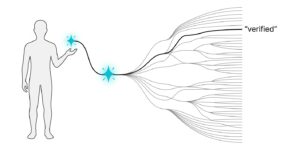
There’s a claim doing the rounds that AI is going to take over — not through one dramatic leap, but by entering a continuous loop: building its own next-generation system, …

Forensic reports flag GPS with a question, not a checkmark: “GPS timezone triangle?” Here’s what that question is actually asking, and what it means when the answer is no.

An F built on GPS coordinates and an F built on a texture statistic are not the same finding. One number cannot say both what was found and how much to trust it.

An AI assistant can diagnose its own repeated logic mistake perfectly, yet keep making it. What actually stopped the loop wasn’t a better prompt.
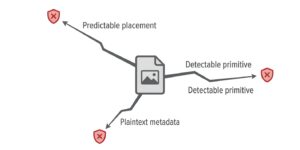
I audited a real open-source steganography tool’s source. Three mistakes — and the worst one needs no password and no statistics, just knowing where to look.
An 88-year-old fraud-detection law, applied to JPEG compression math, flags AI-generated and heavily edited photos — no AI detection model required at all.
How statistical steganalysis actually detects hidden data in images — RS analysis, chi-square testing, and why “undetectable” is a claim no steganography tool should make.
AI tools increasingly sign what they create, and editing the file rarely erases it. How C2PA content credentials work, who’s using them, and where LinkedIn fits in.
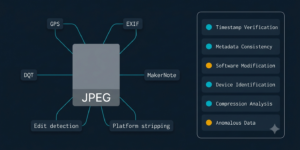
Every JPEG carries six forensic signals beyond what you see in a photo viewer. This guide covers all of them and explains what they reveal in combination.
Three methods now exist for identifying AI-generated images. Two of them fail when the creator says nothing. This article covers all three — and goes deep on the forensic signals that work regardless of what any label says.
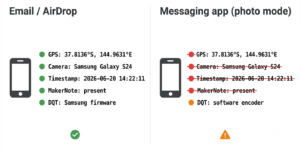
Whether you can read metadata from a received photo depends on the channel, not the tool. Email and AirDrop pass the file unchanged. Messaging apps re-encode — EXIF is gone, but a compression signature takes its place.
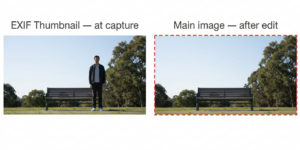
JPEG, WebP, PNG, HEIC, AVIF, and camera RAW files embed a firmware-generated thumbnail before any editing software has touched them. When software re-saves the image without updating the thumbnail, the mismatch is forensic evidence — one of 60+ forensic checks snapWONDERS runs automatically on every photo and video.
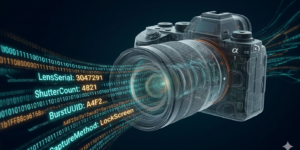
MakerNote is the manufacturer-written EXIF block that standard stripping tools typically leave intact — carrying lens serial numbers, shutter counts, burst UUIDs, and capture context that survives a standard privacy scrub. Its absence from a known device is equally revealing.
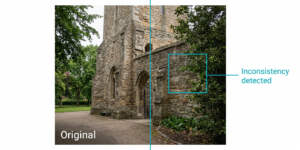
How to tell if a photo has been edited: forensic analysis reads compression signatures, manufacturer metadata baselines, and thumbnail mismatches across JPEG, WebP, PNG, and video.
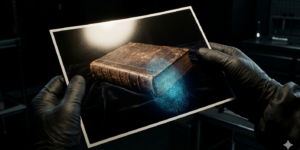
Stripping EXIF metadata doesn’t make a photo anonymous. DQT quantisation tables and Huffman coding tables are baked into the JPEG compression — a permanent camera fingerprint that survives every standard metadata strip. Two of the 60+ forensic checks snapWONDERS reads from every image.
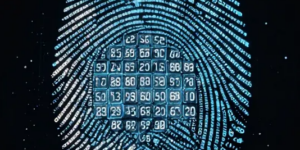
How I built the DQT encoder fingerprint database inside snapWONDERS — deriving libjpeg tables mathematically from the ISO standard, and running a live accumulation pipeline with a trust model to guard against faked metadata. And what this has to do with Vaultify.
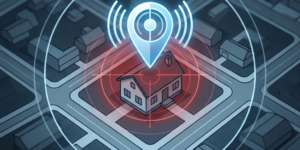
A single geotagged photo shows where you were once. A few dozen shows where you live, work, and go every day — and most people are still sharing photos with full GPS data attached.

Every photo you take on your smartphone embeds a detailed record of where you were, what device you used, and exactly when — and most people have no idea how easy it is to read.

If you host a website, chances are you’re always vigilant about ensuring its security and protecting it from vulnerabilities. Even with exhaustive measures in place to bolster website security, the …

These days I’ve been busy on my latest project at snapWONDERS focused on our latest research development with AI and image processing. Digital media is of utmost importance in today’s …
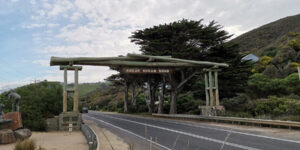
A holiday photo can carry readable text you never thought about — a sign, a slogan, a name badge. It helps accessibility, and leaks context just as easily.

WebP files are typically 25–35% smaller than JPEG at the same visual quality, and browser support is near-universal. The metadata questions do not go away.

After some time away, the work is moving in a new direction. Hueyify has been paused. The story behind that is personal, and it’s told in full at kennethbspringer.au/our-story. The …