

People share more photos and video every year. And although the internet has improved dramatically, it remains as fragile as ever. If you doubt that, try uploading a very large file and see how often it fails partway.
Our own situation complicates things further, because the service is available on both the clearnet and the dark web — and each brings its own set of problems, for quite different reasons.
The fragile internet
We process a great deal of digital media, with a focus on deep analysis, format conversion, scrubbing and regeneration. That volume means we see the evidence regularly. First, though, it is worth explaining the different ways the service can be reached.
The clearnet
A web service over HTTPS, reached the conventional way — over Wi-Fi, cable or mobile data, using browsers everyone knows: Chrome, Firefox, Edge, Opera, Safari. This is the internet most people mean when they say “the internet”.
Website: https://snapwonders.com
The Onion Router (Tor)

We run a hidden service, which means traffic traverses six nodes through the Tor circuit to reach us. Those nodes are what provide anonymity as you browse — but they come at a cost, felt as slower browsing and sessions that drop whenever any node in the circuit is disrupted.
Onion URL: http://swonderstzr43aczpcwdoyc25vwxngyromja7pyb5sf26ap3v535sxqd.onion
The Invisible Internet Project (I2P)

I2P was built with privacy as the starting point. In short, it is a fully encrypted private network layer that protects your activity and your location.
I2P URL: http://snapwonders.i2p or the b32 address
Where it goes wrong
Every one of these routes brings its own problems when uploading large media: Wi-Fi dropouts, intermittent mobile connections, general networking faults, or simply the unreliability of dark web nodes scattered across the world.
There is little more frustrating than watching a large upload crawl towards completion, only to have it fail near the end and have to start again from nothing. We know, because that is exactly the feedback we kept receiving.
It reached the point where it was worth doing something about. Happily, the research turned up a solution built precisely for this problem.
tus — an open protocol for resumable uploads
The goal of tus is to solve unreliable file uploads. It is a protocol for resumable uploads built entirely on HTTP, which keeps things refreshingly simple — and, in hindsight, rather elegant.

It also lets people deliberately pause an upload and pick it up later, continuing from where they left off.
And if an upload is cut off — a network outage, a browser crash, anything — it no longer matters. Reconnect, and the upload resumes from the last point it reached rather than from the beginning.
Visually, the uploader looks exactly as it did before:
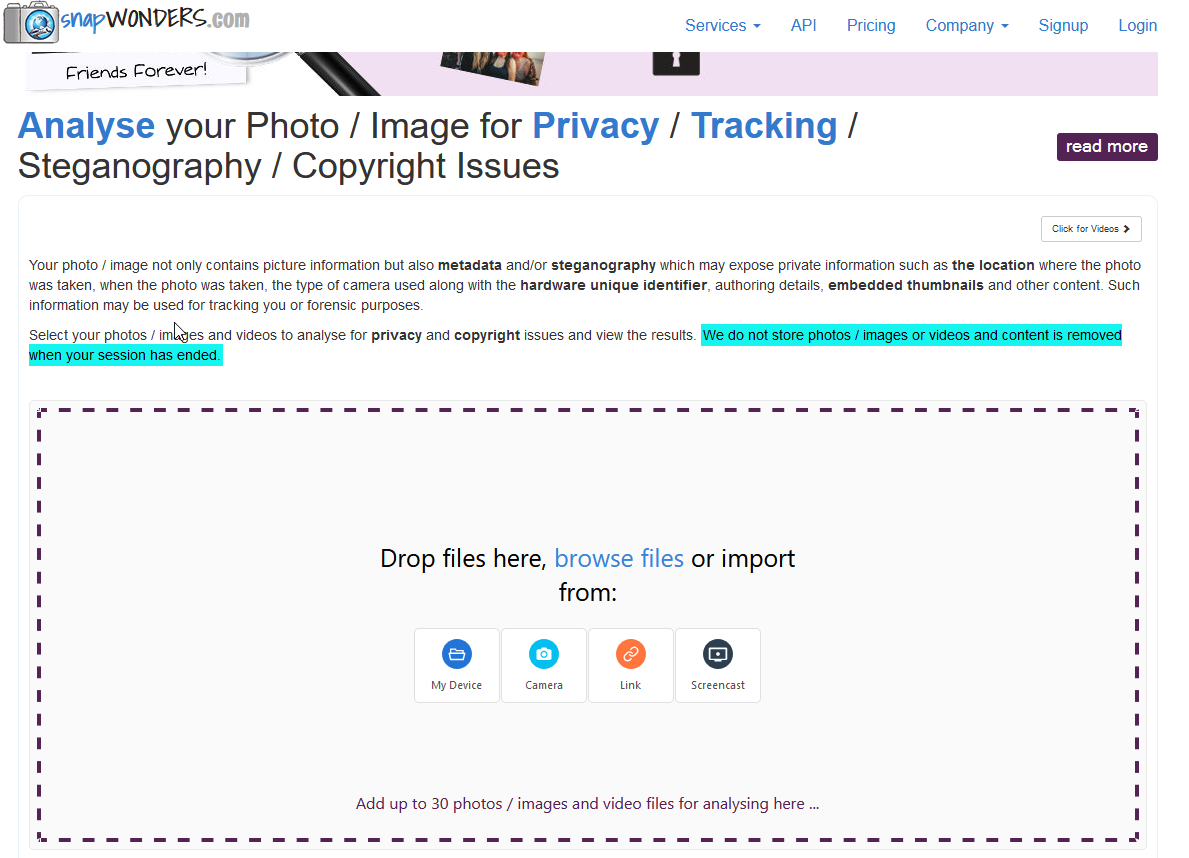
Behind that unchanged screen, uploads are now fully resumable. My thanks to everyone who raised it — the feedback is what prompted the work.